 ultimate-guide
How to Drive Sales on TikTok: A 2026 Guide
Table of Contents
- Why TikTok Matters for E-commerce Sales
- Step 1: Choose Products with Strong TikTok Appeal and Product-Market Fit
- Step 2: Create TikTok Content That Converts
- Step 3: How to Promote Products on TikTok Through Organic Growth
- Step 4: Set Up TikTok Shop for In-App Product Discovery
- Step 5: Use TikTok Ads for Sales and Paid Reach
- Step 6: How to Increase TikTok Shop Sales Through Promotions and Deals
- Step 7: Measure Results and Optimize Your Sales Funnel
- Frequently Asked Questions
Last Updated: October 7, 2026
Why TikTok Matters for E-commerce Sales
TikTok has evolved far beyond entertainment. For e-commerce brands, it's a complete sales channel, not just a place to build awareness. Its algorithm, in-app checkout, and creator ecosystem let discovery and purchase happen in the same session, fundamentally different from traditional social media marketing.
Most brands struggle to drive sales on TikTok because they treat it like Instagram or YouTube: posting polished product shots, waiting for engagement, and hoping traffic converts elsewhere. TikTok rewards authentic, fast-paced content that demonstrates value immediately, and its native shopping features (TikTok Shop, in-app checkout, product links) have essentially eliminated friction between discovery and purchase.
This guide covers the complete framework for driving sales on TikTok, from product-market fit through return on ad spend: building an organic presence, scaling with paid ads, and integrating TikTok Shop to maximize conversions.
Step 1: Choose Products with Strong TikTok Appeal and Product-Market Fit
Not every product succeeds on TikTok. Winners share three traits: they solve a visible problem, are easy to demonstrate, and generate word-of-mouth.
Products that perform well are visual, functional, and result-oriented. Fitness equipment, skincare, home organization tools, and niche apparel work because users see the benefit in seconds.
The key question: can you show the product in action and its benefit within 15 seconds? If not, reframe your positioning.
Step 2: Create TikTok Content That Converts
Creating content that converts means abandoning the polished brand aesthetic. Users scroll past perfection and stop for authenticity, humor, relatability, and immediate value. A 15-second video of a real person using your product and showing the result beats a 30-second cinematic brand film every time.
Focus on product demonstration and proof
The most effective TikTok content shows the product working in real conditions, not a studio: a skincare brand's before-and-after, a productivity tool saving time, a fitness product mid-workout.
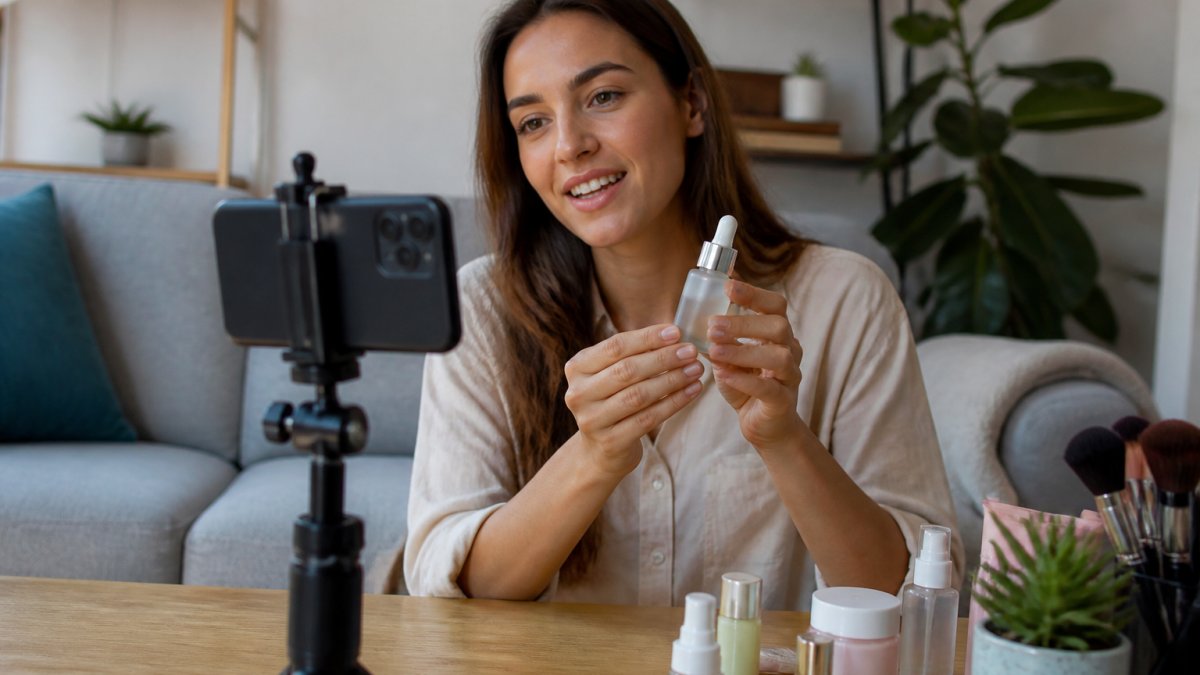
Proof matters more than polish. User-generated content, real testimonials, and behind-the-scenes footage consistently outperform branded content.
Post daily and maintain consistent content strategy
Consistency is the foundation of TikTok success. The algorithm rewards regular posting: daily posting builds an audience far faster than three times per week, and more videos mean more data on what resonates.
Consistency doesn't mean repetition, it means different angles on the same core message: why your product matters. A quick demo one day, a customer story the next, then behind-the-scenes, then a common mistake your product solves.
Step 3: How to Promote Products on TikTok Through Organic Growth
Organic reach on TikTok is real but not passive. You build it by creating shareable content and engaging authentically. The algorithm rewards watch time, shares, and saves, not follower counts or vanity metrics.
Work with creators and influencers
Creator partnerships are the fastest path to new audiences on TikTok. A creator with 50K engaged followers introduces your product to an audience that already trusts them.
Micro-creators (10K-100K followers) often beat mega-influencers: their audiences are more engaged, and they create authentic content that converts (A Comprehensive Overview of Micro-Influencer Marketing).
When approaching creators, be specific. Don't ask them to "create content about our product." Share the product, let them use it, and ask for their honest first impression, the best creator content comes from creative freedom.
Use affiliate creators for performance-based partnerships
Affiliate partnerships align incentives: creators earn commission only when they drive sales.
Affiliate creators stay motivated to produce high-converting content, testing angles, CTAs, and messaging because their earnings depend on it.
Set up affiliate links through TikTok Shop or your own platform, and make sure creators understand the commission structure and can easily access promotional materials. Clear communication prevents misalignment.
Step 4: Set Up TikTok Shop for In-App Product Discovery
TikTok Shop turns the platform from a traffic driver into a direct sales channel. Users discover your product in their feed, click through, and check out without leaving the app, a frictionless experience that significantly improves conversion rates versus sending traffic to an external website.
Optimize product listings and product pages
Your TikTok Shop listings are your storefront and must convert browsers into buyers. Use high-quality images from multiple angles, a concise description highlighting the key benefit rather than features, clear pricing, and visible stock status.
Product pages must answer a skeptical buyer's questions: What is this? Why do I need it? What's the catch? Don't treat TikTok Shop pages like website pages, TikTok users scroll fast, so your page must grab attention and make the case for purchase in seconds.
TikTok Shop versus website checkout: Which drives more conversions
This is a real decision point. TikTok Shop handles checkout natively, the user never leaves the app.
For TikTok-native audiences, TikTok Shop almost always converts better: the in-app experience is faster, payment methods are stored, and users are in a buying mindset.
For most brands, the conversion lift outweighs the commission cost. Test both with paid campaigns, tracking conversion rate and average order value for each, the data will show which channel wins for your product and audience.
Step 5: Use TikTok Ads for Sales and Paid Reach
Organic growth builds your foundation; paid advertising scales sales. TikTok's ad platform lets you target audiences, test creative variations, and measure return on ad spend precisely, the key is building ads that match what the algorithm rewards.
Test and optimize ad creative for your target audience
TikTok ads that look like ads perform poorly; ads that look like organic content perform well.
Start with multiple creative variations: test hooks (problem-first vs. benefit-first), pacing (slow vs. fast cuts), and call-to-actions. TikTok's algorithm learns quickly, after 100-200 conversions you'll have clear winners and losers.
Target by interest, behavior, and demographics, a fitness supplement brand might target fitness content viewers, gym-goers, and health-conscious buyers.
Retargeting and dynamic creative to boost conversion rates
Retargeting users who visited your product page or added to cart is high-value: they know your brand and are closer to purchase. A reminder ad or limited-time discount often converts at 3-5x the rate of cold traffic.
Dynamic creative optimization lets TikTok automatically test combinations of headlines, images, and descriptions. Upload assets instead of manually building 10 variations and let the algorithm find winners, saving time and often outperforming manual ads.
Step 6: How to Increase TikTok Shop Sales Through Promotions and Deals
Promotions and limited-time deals create urgency and give you a reason to create new content and ad campaigns.
Structure promotions to drive volume without destroying margins. A 50% discount attracts bargain hunters, not loyal customers; a 15-20% discount with a time limit ("24 hours only") creates urgency while protecting profitability.
Tie promotions to content: a dedicated TikTok video announcing the deal, briefed creator and affiliate partners, and paid ads targeting cold and retargeting audiences.
Step 7: Measure Results and Optimize Your Sales Funnel
Without measurement, you're guessing. Track metrics at each funnel stage: awareness (video views), interest (clicks to product page), consideration (time on page), and conversion (purchases). Each reveals where the funnel works and where it leaks.
Track conversion rate, cost per acquisition, and return on ad spend
Conversion rate is the percentage of product page visitors who buy. On TikTok Shop it typically ranges from 1-5% depending on product and audience.
Cost per acquisition (CPA) is what you spend on ads per sale. If average order value is $50 and CPA is $15, you're spending 30% of revenue on acquisition, sustainable.
Return on ad spend (ROAS) is revenue divided by ad spend.
Build a complete organic-to-paid sales funnel
Your strongest strategy combines organic and paid.
A complete funnel: organic content attracts viewers → some save or share → viewers visit your product page → some add to cart → retargeting ads remind them to purchase.
Driving sales on TikTok requires understanding its unique dynamics: authentic content wins, in-app shopping removes friction, and paid advertising accelerates what organic content proves works.
Social Climbers is a specialized TikTok marketing agency dedicated to helping brands launch, grow, and scale their presence on the platform.
Frequently Asked Questions
How do you turn TikTok views into actual sales?
Views alone don't convert. You need to drive sales on TikTok by combining product-market fit, consistent content that demonstrates your product, and a clear path to purchase. Use TikTok Shop for in-app checkout, include direct links in your bio, and retarget viewers with paid ads. Track conversion rates and cost per acquisition to measure what's working, not just engagement metrics.
What's the best way to use TikTok ads for sales?
TikTok ads for sales work best when paired with strong product creative and clear targeting. Start by testing ad creative with different angles of your product. Use retargeting to reach people who've already engaged with your content. Set up conversion tracking to measure cost per acquisition. Most brands see better results with dynamic creative that adapts to different audience segments than static ads.
How often should I post to increase TikTok Shop sales?
Daily posting significantly improves your chances of how to increase TikTok Shop sales. The algorithm favors consistent creators, and frequent content gives you more opportunities to reach your target audience. Aim for at least one post per day, though some successful brands post 2-3 times daily. Quality matters more than quantity, so prioritize videos that demonstrate your product or tell a story over filler content.
Should I use TikTok Shop or send traffic to my website?
TikTok Shop removes friction by letting customers buy without leaving the app, which typically results in higher conversion rates. However, some brands see better average order value and customer data collection through website checkout. Many successful brands use both: TikTok Shop for impulse purchases and quick conversions, and website links for customers who want more product information or have larger orders.
How do I know if a product is right for TikTok before investing in marketing?
Products with strong TikTok appeal share common traits: they're visual, solve a real problem, and create an emotional reaction. Test with organic content first, post 5-10 videos showing different angles and use cases. If you're getting 10%+ click-through rates or strong engagement without paid ads, the product-market fit is likely there. Niche and B2B products can work too if they're visually interesting or solve a pain point your target audience cares about.
What's the 3-second rule on TikTok and why does it matter for sales?
You have approximately 3 seconds to grab attention before viewers scroll past. For TikTok content that converts, hook viewers immediately with a benefit, question, or surprising visual. Lead with product demonstration or proof of results rather than slow introductions. The first frame and first second of audio are critical, test different openings to see which ones keep viewers watching long enough to see your call-to-action or product link.
How do I work with influencers without getting flaked on or receiving low-quality content?
Vet creators by reviewing their past content, engagement rates, and audience alignment with your brand. Use affiliate partnerships where creators earn commission on sales, this aligns incentives and ensures they're motivated to perform. Provide clear creative briefs with product talking points but allow creative freedom. Start with smaller creators who often deliver better engagement and authenticity than mega-influencers. Set expectations upfront about content deadlines and quality standards.