 ultimate-guide
TikTok Shop Strategy for D2C: A 2026 Guide
Table of Contents
- Why TikTok Shop Strategy Matters for D2C Brands
- Understanding Your Target Audience and Content Preferences on TikTok
- TikTok Shop Setup and Seller Onboarding
- TikTok Shop Video Content Best Practices for Conversions
- TikTok Shop Influencer Collaboration Templates and Creator Management
- TikTok Shop Affiliate Marketing for Brands: Building Your Creator Network
- How to Scale TikTok Shop Ads: Paid Strategy, Unit Economics, and ROI
- Launch Roadmap: From Day One to Profitability
- Frequently Asked Questions
Last Updated: October 16, 2026
Why TikTok Shop Strategy Matters for D2C Brands
Direct-to-consumer brands must build customer relationships and drive sales without traditional retail intermediaries. A TikTok shop strategy for D2C is essential because the platform combines social discovery, live commerce, and creator partnerships into one sales channel, a path to owned customer relationships and sustainable profitability.
Consumers now discover products on TikTok rather than Google or Amazon, spending hours watching short-form video. When a product appears authentically in that feed, purchase intent follows. At Social Climbers, we help brands align their TikTok shop strategy for D2C with how the algorithm distributes content.
The financial case is compelling: TikTok Shop embeds checkout directly into the app, so customers see a product, tap to buy, and never leave TikTok. This frictionless path converts significantly higher than external websites, and for thin-margin brands every point of conversion improvement impacts profitability.
Understanding Your Target Audience and Content Preferences on TikTok
Before launching any TikTok shop strategy, understand who uses the platform and what resonates. TikTok skews younger, most users are 16 to 24, but has grown among older demographics. Preferences differ fundamentally from Instagram or Facebook: users expect raw, unpolished authenticity over highly produced content.
Successful D2C brands study TikTok's built-in analytics and trending sounds: which creators in your category gain followers fastest, what hooks they use in the first three seconds, which hashtags appear in high-performing videos. This beats traditional demographic data alone.
The algorithm rewards watch time and completion rate above all else. A video that keeps viewers watching for 8 out of 10 seconds outperforms a polished 30-second spot that viewers skip at 3 seconds.
Community engagement patterns matter too. TikTok comments are playful and direct, duets and stitches are common, and sound usage is currency. Brands that respond quickly and encourage participation get a stronger algorithmic boost than those treating TikTok as a broadcast channel.
TikTok Shop Setup and Seller Onboarding
Getting your TikTok Shop operational starts with eligibility verification. TikTok requires an account at least 30 days old, 5,000 followers, and age 18+, with additional regional requirements. Once you meet these thresholds, apply for TikTok Shop access through your creator dashboard.

Onboarding means connecting business information, adding bank details for payouts, and setting up your product catalog. TikTok requires accurate business registration and tax documentation to verify seller legitimacy. Organize your registration, tax ID, and banking information beforehand to save significant time.
Your product catalog is the foundation of your shop. Each listing needs high-quality images, clear descriptions, accurate pricing, and stock information. TikTok recommends at least three images per product, with the first as your strongest visual hook.
Fulfillment logistics matter from day one. Decide whether to handle fulfillment directly or partner with a third-party provider, processing time, shipping costs, and return policies all impact conversion and satisfaction.
TikTok Shop Video Content Best Practices for Conversions
Your TikTok shop video content best practices start with one principle: every video needs a clear hook within the first second. A surprising statistic, relatable problem, or unexpected visual determines whether viewers keep watching or scroll past.
Product demonstration videos perform exceptionally well. Show your product in use, highlight unique features, and demonstrate the transformation it creates, a skincare brand's before-and-after, a fitness brand's proper form. Vague benefits don't convert; concrete transformations do.
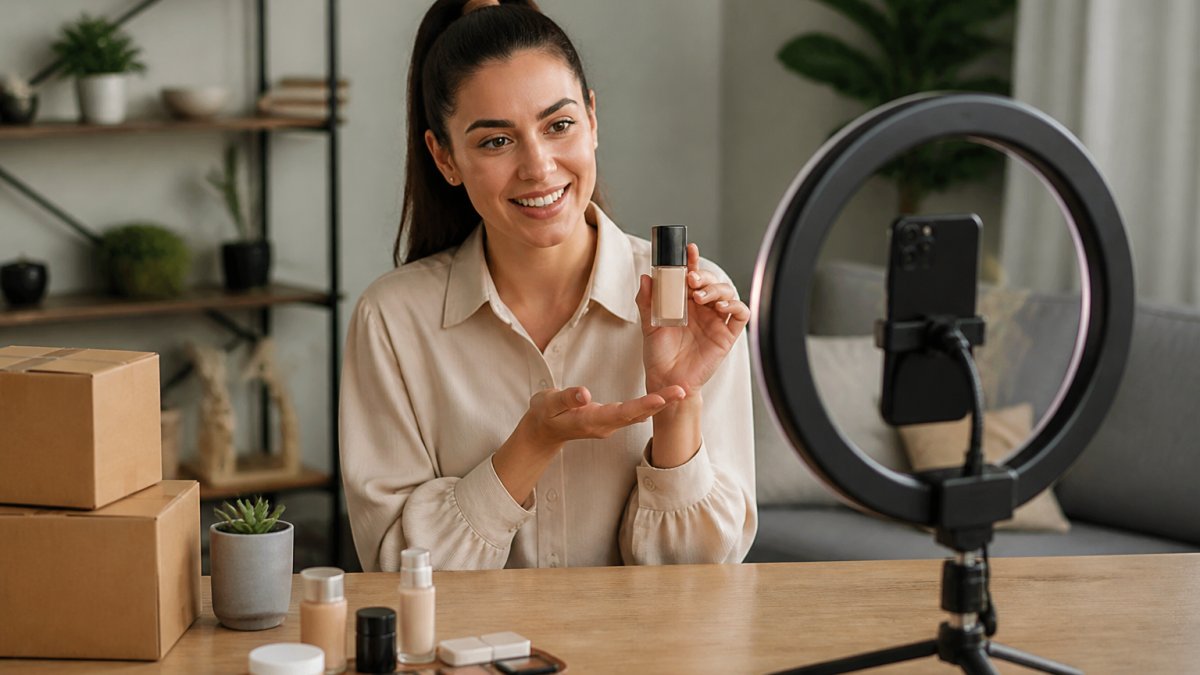
Authenticity outperforms polish. A founder filming a quick phone demo with casual language and natural lighting typically beats a professionally produced commercial. Prioritize genuine connection over production value, users sense when content tries too hard to sell.
Use user-generated content heavily. Encourage customers to post unboxing videos, reviews, and creative uses, then repost with proper attribution.
Trending sounds are algorithmic fuel: they give TikTok's algorithm more context for categorizing and distributing your video. Don't force your product into unrelated trends, identify sounds that fit your content naturally and use them strategically.
TikTok Shop Influencer Collaboration Templates and Creator Management
Creator partnerships accelerate growth more effectively than paid ads alone. Look beyond follower count: a creator with 50,000 engaged followers in your niche often outperforms one with 500,000 disengaged followers in a broad category.
Develop a TikTok shop influencer collaboration template that clarifies expectations upfront: deliverables (video count, posting timeline, content requirements), compensation, usage rights, and performance metrics. A clear template prevents misunderstandings without micromanaging creators' process.
The most effective partnerships feel organic to the creator's audience. Provide talking points rather than scripts and let creators interpret your product in their own voice, forced content damages both their credibility and your reputation.
Compensation varies: flat fees, performance bonuses, or product plus commission. Smaller creators (under 100,000 followers) often accept product-only arrangements; larger ones command significant fees. Align incentives, creators who benefit from driving sales put more effort into compelling content.
Vetting creators thoroughly prevents costly mistakes. Review their recent videos, engagement quality, and audience demographics. Do their followers match your target customer? Do they regularly promote products? Have previous brand partnerships felt authentic or overly promotional?
TikTok Shop Affiliate Marketing for Brands: Building Your Creator Network
Affiliate marketing on TikTok transforms creators into a distributed sales force. Rather than paying fixed fees, you pay commission on sales generated through each creator's unique link or code.
Building a TikTok shop affiliate marketing for brands program starts with defining your commission structure. Most D2C brands offer 5-20% commission, depending on product margins and market competition. Higher commission attracts more creators but compresses your margin.
Recruitment happens through direct outreach and affiliate networks. Identify creators whose audience matches your target customer, then pitch them directly with your affiliate opportunity. Alternatively, platforms like Influee and TikTok's native affiliate tools help creators discover your program.
Creator onboarding for affiliates should be frictionless. Provide your affiliate link, tracking codes, sample content, and product information. The easier you make it for creators to participate, the more will actively promote your products.
Tracking and attribution matter significantly. Ensure your affiliate platform accurately tracks sales from each creator's link. Regular reporting, weekly or monthly, keeps creators engaged and motivated.
The psychological shift from one-off collaborations to ongoing affiliate relationships changes creator behavior.
How to Scale TikTok Shop Ads: Paid Strategy, Unit Economics, and ROI
Scaling beyond organic reach and creator partnerships requires paid advertising. TikTok Ads Manager offers several campaign objectives aligned with sales goals: traffic to your shop, conversions, and collection views.
Your how to scale TikTok shop ads approach should begin with small test budgets. Rather than launching with a large daily spend, test creative variations with $10-20 daily budgets across multiple ad sets.
Unit economics determine profitability at scale. Calculate your contribution margin per product: revenue minus cost of goods, fulfillment, and payment processing fees.
Customer acquisition cost (CAC) is the critical metric.
Audience targeting on TikTok offers several options: interest-based targeting, lookalike audiences, and custom audiences from your existing customer list. Lookalike audiences built from your best customers typically outperform broad interest targeting.
Creative refresh matters significantly. Ad performance typically declines after 2-4 weeks as audiences see the same creative repeatedly. Continuously test new creative variations, different hooks, different product angles, different messaging.
Launch Roadmap: From Day One to Profitability
A structured launch roadmap prevents common missteps and accelerates your path to profitability.
Weeks two through four should focus on organic content and creator outreach. Build 10-15 pieces of organic content showcasing your products, demonstrating value, and establishing your brand voice.
Weeks five through eight introduce paid advertising with small test budgets. Launch conversion campaigns with $10-20 daily budgets across multiple creative variations. Monitor performance daily.
By week nine, you should have clear data on which products convert best, which audience segments respond to your messaging, and which creators drive the most sales.
Profitability typically emerges around month four to six, assuming you've executed consistently. This timeline varies based on product margins, market competition, and creative effectiveness.
Measurement and incrementality matter more than most brands acknowledge. Not all sales attributed to your TikTok Shop would have happened without TikTok. Some customers would have found you through other channels or purchased anyway.
Building a sustainable TikTok Shop presence requires balancing organic growth, creator partnerships, and paid advertising.
Frequently Asked Questions
How do I set up a successful TikTok Shop for my D2C brand?
Start by creating a TikTok Business Account and applying for TikTok Shop access through your creator dashboard. Complete seller onboarding by verifying your business details, setting up payment methods, and uploading your product catalog. Optimize your storefront with clear product listings, high-quality images, and compelling descriptions. Link your TikTok Shop to your content strategy so every video drives traffic to your products. Most D2C brands see faster approval when they demonstrate existing TikTok audience engagement and clear product-market fit.
What is the best content strategy for TikTok Shop conversions?
Focus on short-form video content that shows products in real-world use rather than static product shots. Create authentic, unscripted content that resonates with your target audience, behind-the-scenes footage, customer testimonials, and problem-solution narratives perform well. Use shoppable video features to tag products directly in your clips, reducing friction between discovery and purchase. Test different content formats: trending sounds, educational content, and lifestyle integration. Track which video types drive the highest click-through rates and conversion rates, then double down on those formats.
How do influencer partnerships impact TikTok Shop sales?
Creator and affiliate marketing drives significant volume for D2C brands on TikTok Shop. Partner with micro-influencers (10K-100K followers) in your niche who have genuine audience alignment, they typically convert better than mega-influencers. Use affiliate commissions to incentivize creators to promote your products; this aligns their earnings with your sales. Manage creators through clear briefs, performance expectations, and consistent communication. User-generated content from creators builds trust and social proof, which directly impacts conversion rates and customer acquisition cost.
How do I track ROI on TikTok Shop campaigns?
Use TikTok's built-in analytics to measure views, watch time, click-through rates, and conversion rates. Track customer acquisition cost by dividing total ad spend by new customers acquired. Calculate contribution margin by subtracting platform fees, fulfillment costs, and customer acquisition cost from your average order value. Set up conversion tracking through TikTok Pixel so you can measure which videos and creators drive actual sales. Compare return on ad spend across different campaign types, organic content, influencer collaborations, and paid ads, to identify your most profitable channels.
What are the common mistakes to avoid when launching a TikTok Shop?
Avoid treating TikTok Shop like a traditional ecommerce platform, focus on entertainment and community, not hard selling. Don't ignore product discovery; optimize your product listings and use the algorithm to your advantage by posting consistently. Avoid partnering with creators who lack audience alignment just because they have large follower counts. Don't overlook fulfillment and returns operations; poor logistics damage your brand reputation. Skip vanity metrics like views and focus on conversion rate and profit margin instead. Finally, avoid launching without a clear understanding of your unit economics, know your costs before you scale ad spend.
Is TikTok Shop worth it for small D2C businesses?
Yes, if your product has strong product-market fit and appeals to TikTok's demographic (primarily Gen Z and younger millennials). TikTok Shop offers lower customer acquisition costs compared to traditional ecommerce channels for many D2C brands. The platform's algorithm rewards authentic content, which small brands can create more easily than large corporations. However, success requires consistent content creation, creator partnerships, and willingness to test and iterate. Start with organic content and influencer collaborations before scaling paid ads; this reduces risk while you validate the channel.
How does channel conflict affect D2C brands selling on TikTok Shop?
Selling on TikTok Shop can cannibalize sales from your direct website or other channels if not managed carefully. Consider whether TikTok Shop customers are new to your brand (incremental) or existing customers switching channels (channel conflict). Price consistently across channels to avoid customer confusion, but use TikTok Shop promotions strategically to drive trial. Build customer ownership by collecting email addresses and retaining customers across channels. Track which channel drives the highest lifetime value customers, not just the highest immediate sales.
What fulfillment and returns strategy should I use for TikTok Shop?
Set realistic delivery timelines, TikTok Shop customers expect fast shipping. Use fulfillment partners or in-house operations that can handle volume spikes from viral content. Establish clear returns and refund policies to reduce customer friction and chargebacks. Monitor return rates by product and creator to identify quality issues early. Poor fulfillment directly impacts your profit margin and brand reputation, so invest in reliable logistics before scaling ad spend. Track fulfillment costs as a percentage of average order value to ensure profitability.